Our mission is to help athletes find the best gear and supplements. We only recommend products we’ve tested or researched deeply. If you buy through our links, we may earn a commission at no extra cost to you. This helps us keep RealSports running. Learn more >
OBESITY MANAGEMENT
Obesity has become one of the most pressing health challenges of the 21st century, affecting millions of people across all regions and economic levels. According to the World Health Organization (WHO), in 2022 about 2.5 billion adults worldwide were overweight, and of these, more than 890 million were living with obesity (Body Mass Index ≥30 kg/m²). This means roughly 16% of all adults were obese, a figure that has more than doubled since 1990 as lifestyles have shifted toward more sedentary activity and high-calorie diets. Overweight and obesity are no longer problems confined to wealthy nations; they are rising rapidly in low- and middle-income countries in Africa, Asia, and Latin America as processed foods and sugary drinks become more accessible and physical activity declines.
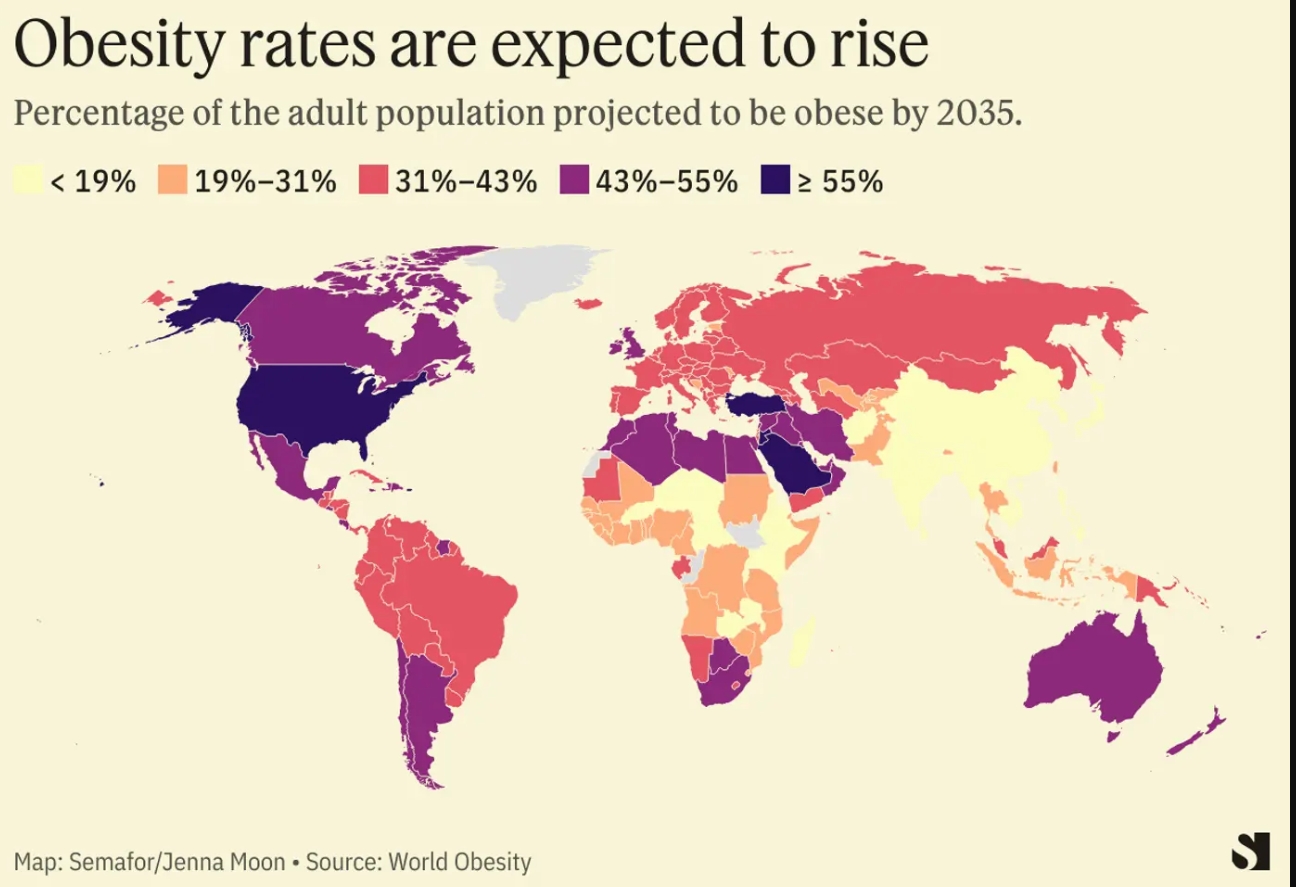
The burden of obesity differs widely from country to country, reflecting variations in diet, culture, economic status, urbanization, and public health policies. In small island nations in the Pacific such as American Samoa, Tonga, Nauru, and Tuvalu, adult obesity rates exceed 60%, with American Samoa at over 75%, making these some of the highest prevalence rates in the world. These regions have experienced dramatic shifts from traditional diets to imported processed foods, contributing to rapid weight gain and health complications.
Among larger economies, the United States consistently ranks high, with approximately 36-40% of adults living with obesity, one of the highest rates among developed countries. While some recent data suggest slight improvements in a few U.S. states, the national level remains dangerously elevated, with state obesity rates typically ranging above 30% and often rising in underserved communities with limited access to healthy food and safe exercise spaces.
In Europe, patterns vary significantly. Some countries such as Romania and Georgia have projected adult obesity prevalence above 35-40%, while others like Italy, France, and Switzerland have much lower rates closer to 10-15%. These differences often relate to distinct dietary traditions emphasizing fresh foods and lifestyle habits that include more physical activity. However, even within Europe, the upward trend in obesity remains a concern, especially as younger populations adopt more sedentary behavior.
Across the Asia-Pacific region, health outcomes show marked diversity. Nations with higher incomes such as Australia, New Zealand, and Brunei see adult obesity rates above 30%. In contrast, countries like Bangladesh, Cambodia, and Vietnam have much lower obesity rates among adults, often below 5-10%. Still, the pace of change is significant. Between 2010 and 2022, obesity and overweight prevalence among both adults and adolescents rose fastest in lower-income countries within the region, with countries like Pakistan seeing adult obesity nearly double and adolescent rates increase more than fourfold in the same period.
In South Asia, although overall obesity rates are lower compared to Western nations, there is a concerning rise among young populations. For example, a systematic review found that obesity among children and adolescents was above 6% in countries like Bangladesh, Pakistan, and India, and when combining overweight and obesity, nearly 20% of youths in these countries are above healthy weight thresholds. These trends foreshadow future health burdens if preventive steps are not taken.
Countries in the Middle East also report high levels of adult obesity, with nations like Kuwait, Qatar, and Saudi Arabia showing rates above 40%. These elevated figures are linked to rapid urbanization, high consumption of calorie-dense foods, and lower levels of routine physical activity.
For children, the situation is especially alarming. UNICEF estimates that over 188 million children and adolescents globally are obese, marking the first time obesity in young people has surpassed underweight in most regions outside sub-Saharan Africa and South Asia. These children face increased risk of chronic conditions like type 2 diabetes, cardiovascular disease, and psychological effects such as low self-esteem and stigma. Without early intervention, these patterns are likely to continue into adulthood, compounding health challenges and economic costs.
The health consequences of obesity are well-documented. Excess body fat increases the risk of heart disease, stroke, certain cancers, type 2 diabetes, musculoskeletal disorders, and many other chronic illnesses. Economically, obesity strains healthcare systems and reduces productivity, costing nations billions in treatment expenses and lost work output. For instance, in Thailand, obesity-related healthcare and productivity losses are estimated to account for around 1% of the national GDP.
Managing obesity requires a comprehensive and multi-layered approach that goes beyond individual willpower. Effective strategies combine policy interventions, community support, and clinical care. At the policy level, governments are implementing taxes on sugary beverages, restricting fast-food marketing to children, improving food labeling, and creating urban environments that encourage walking and cycling. These measures help shift entire populations toward healthier choices by making nutritious foods more affordable and physical activity more accessible.
In clinical settings, management includes personalized diet and exercise plans, behavioral counseling, and in some cases pharmacological treatments or bariatric surgery. Newer medications such as GLP-1 receptor agonists (e.g., semaglutide) have shown promise in helping adults achieve significant weight loss when combined with lifestyle changes, though access and cost remain challenges in many regions.
Community-based programs also play a vital role. Local health campaigns that promote balanced nutrition, regular physical activity, and reduced sedentary time can empower individuals with skills and motivation. Schools, workplaces, and social organizations are increasingly seen as platforms for obesity prevention, offering structured activities, healthier meals, and support networks.
Cultural and societal factors are crucial in shaping both the rise of obesity and how it’s managed. In many countries, obesity is now viewed through the lens of social equity, as lower-income populations often have higher rates due to limited access to healthy foods, safe exercise spaces, and health education. Addressing these inequalities is a core part of sustainable obesity management, requiring investment in food systems, public infrastructure, and social programs.
Preventing obesity ideally starts early in life. Encouraging breastfeeding, limiting consumption of ultra-processed foods, ensuring active play for children, and integrating health education into school curricula can build long-term healthy habits. Parents, caregivers, educators, and policymakers must work together to create environments where healthy choices are easier and sustained.
In conclusion, obesity is a global epidemic with deep health, economic, and social consequences. Data from WHO and regional health bodies show that obesity prevalence ranges from single digits in some countries to over 70% in others, reflecting variations in diet, lifestyle, and policy environments. Effective obesity management requires national leadership, supportive environments, evidence-based clinical care, and community engagement. Tackling this challenge now can protect future generations from preventable illness and help nations build healthier populations.
Medical Disclaimer
The information provided on Your Health Matters is for educational and informational purposes only. It is not intended as medical advice, diagnosis, or treatment. Always consult a qualified healthcare professional before making changes to your diet, exercise routine, or supplement use—especially if you have a medical condition or are taking medication.
RealSports is powered by experts in fitness, nutrition, and combat sports. With experience in kickboxing, bodybuilding, wrestling, and powerlifting, we deliver practical, science-backed advice and trusted product recommendations. Our mission is simple: help athletes and everyday people train smarter, recover faster, and perform at their absolute best.
Disclaimer: The information provided on this website has been carefully researched and tailored to meet the specific needs of the topics discussed. All content has been derived from credible online sources and studied thoroughly to ensure accuracy and relevance. No part of this content has been intentionally copied or plagiarized for the purpose of gaining traffic or misleading readers. We are committed to providing original, well-researched material that adds value to our audience's understanding of the subject matter.






Feel Free to Connect. Be a bigger part of our community. Or DM your HEALTH/ FITNESS issue for the best REAL solution. No Gimmick. Committed to Serve.
Combat Sports / Kickboxing Articles
Reviewed by Marcus Bennett — Kickboxing & Combat Sports Specialist
Website managed by Tahraj — Nutrition and Health Expert.